
How Freeze-Thaw Cycles Damage Concrete in Columbus
Freeze-thaw damage can develop when water in concrete freezes and creates more pressure than the material can withstand. The risk depends on moisture exposure, the concrete mixture, installation and curing. Air entrainment, drainage and suitable surface protection help reduce that risk, but no sealer makes a slab immune to winter damage.
For Columbus homeowners, the useful questions are practical: where does water collect, what has changed since last winter, and is the damage confined to the surface? This guide explains what to look for before deciding whether to maintain, repair or replace concrete. Supreme Concrete Solutions provides concrete repair and new driveway and patio construction across the Columbus area.
Why wet concrete is vulnerable during a freeze
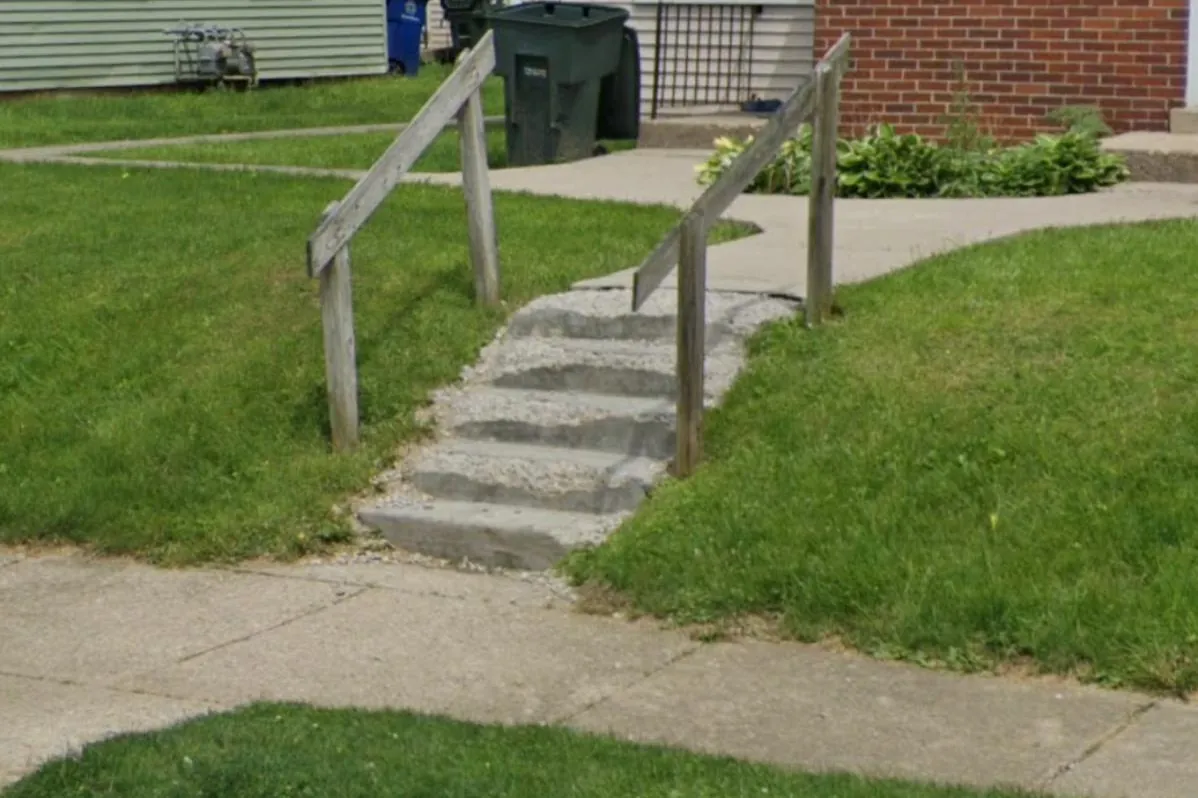
Concrete contains a network of pores. When those pores are sufficiently filled with water, freezing can create damaging internal pressure. Repeated exposure can worsen deterioration in susceptible concrete. The Concrete Society's explanation of freeze-thaw damage emphasizes saturation and the material's ability to resist that pressure.
This does not mean every cold night enlarges every pore, or that all slabs follow the same countdown to failure. Concrete designed and installed for its exposure can resist repeated freezing and thawing. Moisture conditions and the quality of the concrete help explain why adjacent surfaces can perform differently.
What Columbus weather tells you about exposure
Columbus has winter temperatures on both sides of freezing. The National Weather Service's 1991–2020 January normals show a monthly average high of about 37°F and low of about 22°F. Those figures provide local climate context; they are not a count of damaging cycles inside a driveway.
An annual cycle count needs a defined measurement method and time period. Air temperatures crossing 32°F do not reveal how wet a slab was or what happened throughout its depth. A weather statistic alone cannot predict when your concrete will deteriorate.
Look at the property itself. Where does snowmelt collect? Does a downspout discharge beside the patio? Is the driveway apron exposed to salt carried from the street? Record these conditions rather than assuming that every property in Franklin County has the same soil, drainage or exposure.
Recognize the damage without assigning it a fixed stage
Flaking, cracking and loose concrete deserve different descriptions. They do not establish a five-stage aging sequence, and visible damage does not prove the problem has been developing for years.
Surface scaling and exposed stone
Scaling is the loss of surface mortar, which may begin as small flakes and become more extensive. Deeper surface loss can expose the stone aggregate. Note the affected area, depth and whether it is growing. Exposed stone alone does not tell you the condition of the slab below it or automatically require full replacement.
A separated surface layer
Delamination means a layer has separated from the concrete beneath it. It can have causes other than winter exposure. NRMCA's guidance on delamination describes how premature or excessive finishing can trap air and bleed water beneath a dense surface. An inspection should consider installation history as well as weather.
Deeper breaks or corrosion around reinforcement
Spalling describes broken-away concrete and may involve more than superficial flaking. Where steel is present, corrosion can create internal pressure and break away the surrounding concrete. NRMCA's corrosion guidance explains this separate mechanism. Rust staining, exposed steel or deep material loss calls for closer evaluation; it is not simply the final stage of every freeze-thaw problem.
Cracks accompanied by settlement, raised edges or wall movement also need their own assessment. For concerns involving a building's foundation, see our foundation crack warning signs guide.
Winter durability starts with the concrete and its placement
Air entrainment provides pressure relief
Air entrainment creates small, distributed air bubbles within the concrete. These spaces help relieve pressure associated with freezing water. The American Concrete Institute explains their role in improving resistance to freezing and thawing when concrete is critically saturated.
This is a mixture characteristic specified before placement, not something a later coat of sealer can add. Ask how the proposed mixture suits exterior moisture and freezing exposure, and how its specified properties will be checked. A general promise of “strong concrete” is less useful than a clear explanation of the project specification.
Mixing water must stay within the design limits
The water-to-cementitious-materials ratio compares water with the total cementitious binder by mass. Excess water can reduce strength and durability. However, seeing water added at a truck does not by itself prove an error: NRMCA's jobsite water guidance allows controlled adjustment within the specified limits.
The contractor and supplier should select the mixture for the application and exposure. One ratio quoted online is not a complete specification for every Columbus driveway, patio or structural element. Discuss the intended finish, moisture exposure and deicer exposure together rather than selecting concrete from one number.
Curing helps the mixture develop its properties
Curing maintains suitable moisture and temperature after placement. It supports the cementitious materials' reaction with water so concrete can develop strength and durability. NRMCA's curing guidance explains why allowing a new surface to dry prematurely can impair its performance.
For a new project, ask what curing method will be used and what you must do afterward. Keep the written care instructions with the contract, including when people and vehicles may use the surface. Appearance alone does not establish readiness for use.
Cold-weather placement needs a protection plan
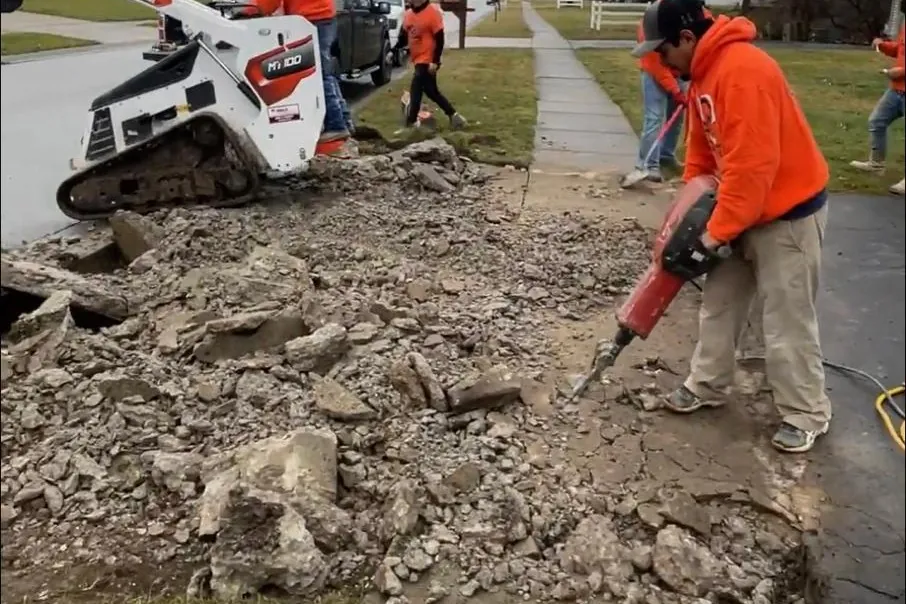
New concrete needs protection while it develops adequate strength. A recently placed slab is not automatically safer than an older slab simply because it is still gaining strength. Freezing too early can damage it.
NRMCA's cold-weather guidance addresses temperature control, preparation, curing and protection. Cold conditions slow strength gain, and an accelerating admixture does not replace freeze protection. The requirements depend on the actual conditions and concrete, not a blanket October-to-March ban or a universal 28-day waiting period.
Before scheduling a late-season pour, ask how the forecast will affect placement and protection. Clarify who will monitor the concrete, when protective materials may be removed, and what would cause the work to be postponed. Those decisions belong in the construction plan before the truck arrives.
Match the sealer to the surface and the product instructions
A suitable penetrating water repellent can reduce water absorption. It cannot restore missing concrete, correct settlement or add air entrainment to an existing slab. Existing coatings and repairs also affect which treatment is compatible.
Product requirements vary. For example, PROSOCO's Saltguard WB data sheet sets surface and air temperature limits, moisture conditions and compatibility restrictions. It also describes a treatment that preserves the concrete's natural appearance. A missing sheen is therefore not a universal sign that protection has failed.
Before application, identify the current coating or treatment and review the selected product's preparation, drying and weather requirements. A date in September is no guarantee that conditions are suitable. Do not apply another coat just because a surface looks dull or water beading has changed.
Keep the product name and application date. Ask for a maintenance recommendation based on that product and the surface's exposure. A fixed two-to-three-year resealing rule is not appropriate for every treatment. If flaking has already started, have the damage assessed before treating it as a routine resealing job.
Reduce avoidable winter exposure
Winter care should address both concrete preservation and a usable walking surface. NRMCA's scaling prevention guidance recommends avoiding deicing chemicals during the first winter and using them moderately afterward. Clean sand can provide traction, but it does not melt ice. Follow the installer’s care instructions and the deicer label rather than assuming a “concrete safe” claim eliminates risk.
Make drainage part of the conversation. Note recurring puddles and water discharged onto concrete. Ask whether the appropriate correction concerns a downspout, adjoining ground, a drain or the slab itself. Coating the surface does not resolve the source of persistent ponding.
Compare maintenance, repair and replacement after assessment
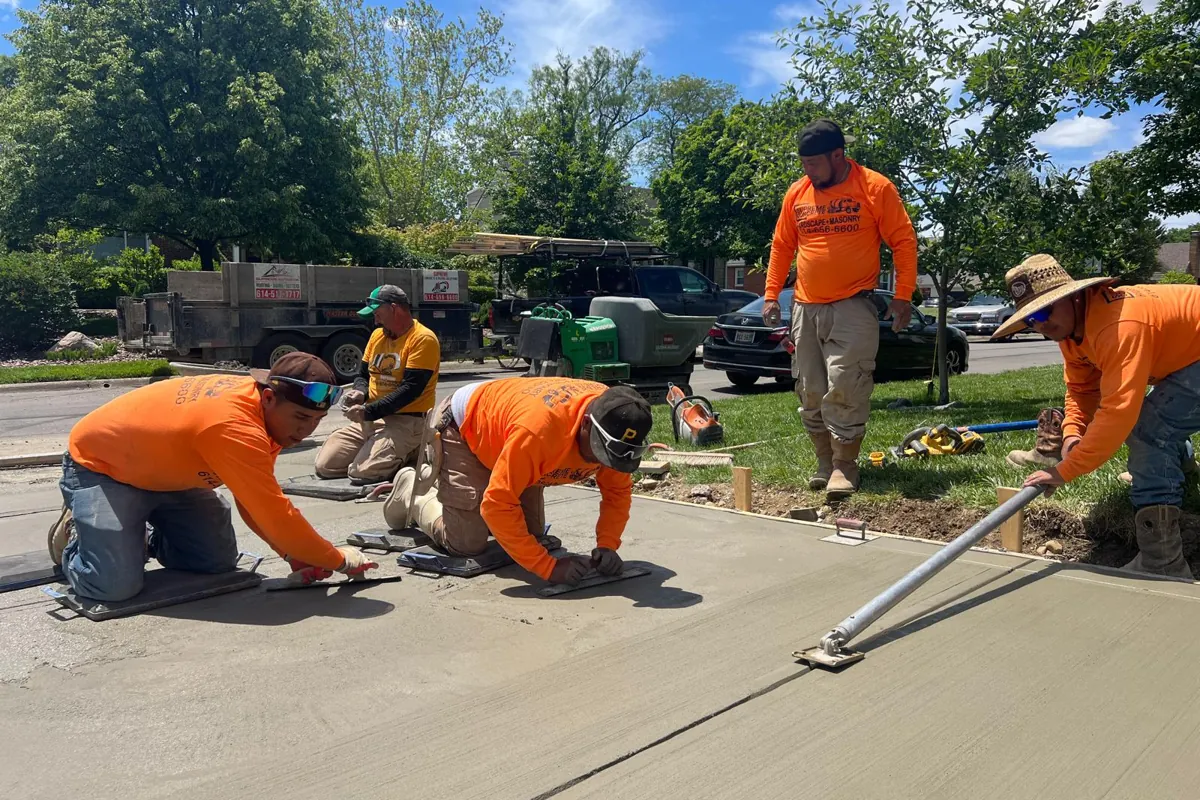
An estimate should explain the condition being treated and why the proposed work suits it. Ask whether the problem is superficial material loss, deeper deterioration, movement or a combination.
Light or moderate scaling may be repairable where sound concrete remains. A bonded repair depends on proper preparation and a sound receiving surface. Extensive, progressing deterioration can make resurfacing impractical. Repair appearance may also differ from the surrounding slab.
Ask these questions before choosing a scope:
- What findings support repair rather than replacement?
- Is deterioration limited to one section or spread across the surface?
- Does the proposal include any needed drainage correction?
- How will repaired areas meet the adjoining concrete?
- What appearance differences, maintenance needs and warranty limits should I expect?
Photograph the whole surface and the damaged areas before the visit. Include installation dates, previous repairs, known sealers and when you first noticed the change. Mark trip hazards and restrict access to loose or unstable areas while arranging assessment.
Discuss your concrete project with Supreme
Supreme Concrete Solutions handles concrete repair, driveway installation and replacement and concrete patios. Share what you are seeing, where water collects and whether you need work on an existing surface or a new installation.
We serve Columbus, Dublin, Grove City, Pickerington, Reynoldsburg, Upper Arlington, Westerville, Whitehall and Worthington. Request an estimate, call (614) 705-0285, or email info@supremeexterior.com.