
Masonry Contractor Columbus OH
Supreme Concrete Solutions provides masonry construction, repair and restoration for Columbus-area homes. From worn mortar joints to a new entrance or outdoor feature, we help you define the work, consider materials and plan the project around your property.
Tell us whether you want to repair existing masonry, change its appearance or build something new. A wall with deteriorated joints needs a different discussion from a leaning wall or a new set of steps. The condition and purpose of the structure should guide the scope.
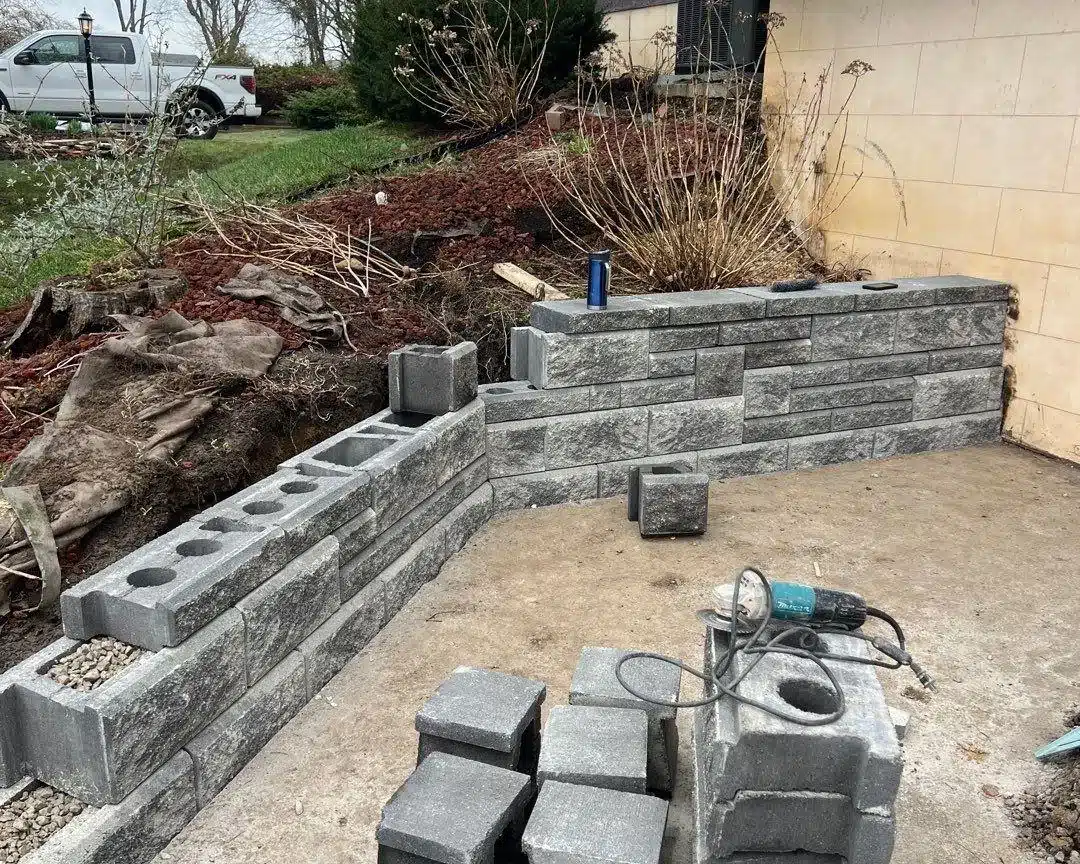
Masonry repairs and new construction for your home
Our masonry work covers practical improvements as well as decorative features. Projects can include:
- Brick and stone repair and restoration
- Mortar joint repointing, commonly requested as tuckpointing
- New masonry walls and decorative elements
- Entrance steps and access improvements
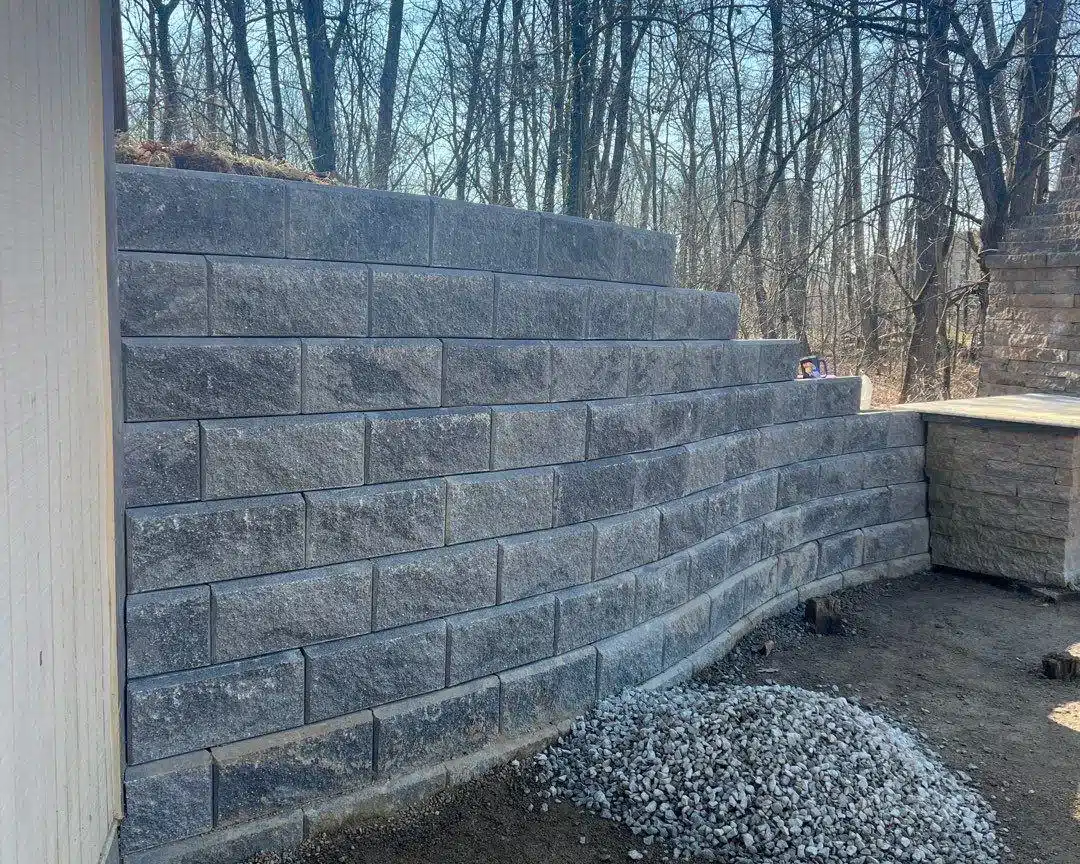
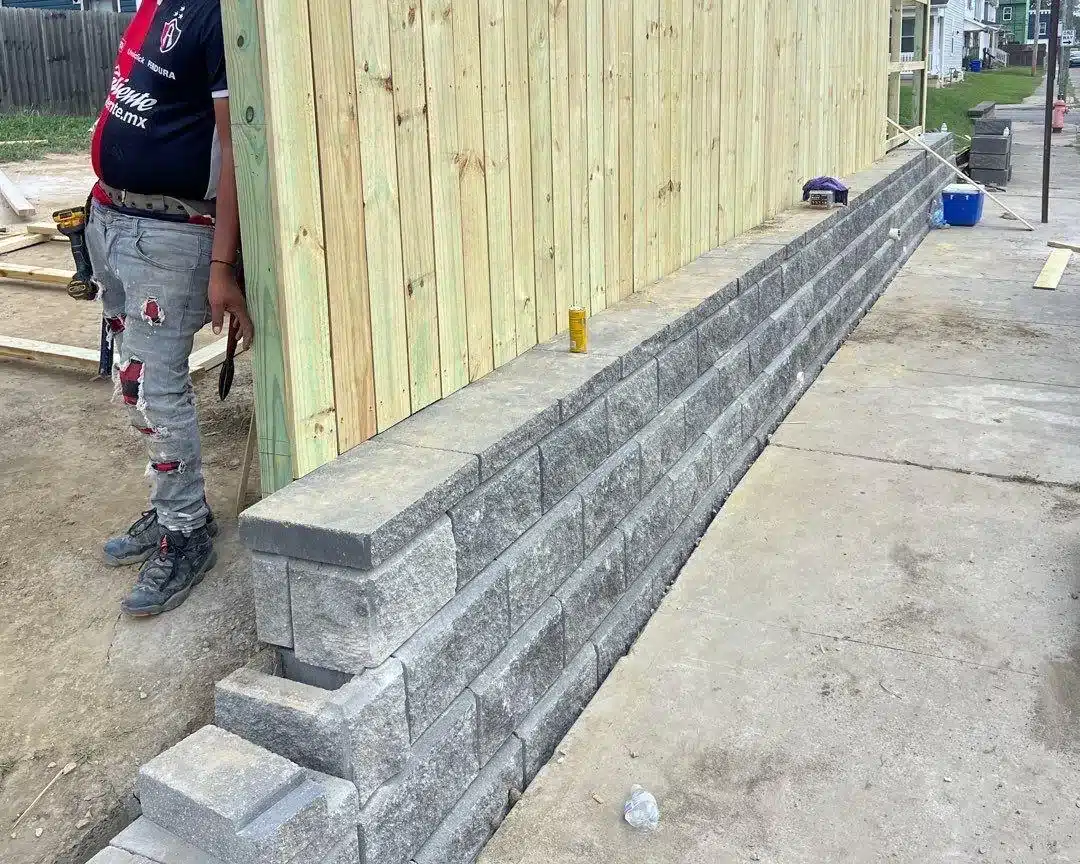
- Walkways, garden features and retaining walls
- Fireplaces, firepits and outdoor kitchen features
For new work, bring examples of the appearance you want and explain how you will use the space. For repairs, share photos of both the damaged area and the surrounding masonry. These help distinguish an isolated repair from a larger project involving support, moisture or adjoining construction.
You can also explore our retaining wall services, foundation installation and repair, and chimney repair and installation for those specific projects.
Repointing replaces deteriorated mortar joints
Repointing removes failing mortar from between masonry units and replaces it with compatible material. Homeowners often call this tuckpointing, although traditional tuckpointing refers to a decorative joint treatment. When requesting a quote, describe whether you need deteriorated joints repaired or a particular finished appearance.
Open, loose or missing joints deserve attention, but fresh mortar is not a complete answer to every masonry problem. Cracked units, wall movement or water entering elsewhere may require additional work. A scope should identify which joints and units need attention and what other defects must be addressed.
Tell us about previous repairs, including when they were made and whether cracks or gaps have returned. Old photographs or repair records can help explain changes that are difficult to judge from one visit.
Choose mortar that works with the existing masonry
For older masonry, compatibility involves strength, moisture movement and appearance. A mortar that looks close in color can still be unsuitable for the surrounding brick or stone.
The National Park Service guidance on repointing explains why replacement mortar must suit the existing masonry. Historic soft brick can be damaged by an overly hard or insufficiently permeable repair mortar. Permeability describes how readily moisture can move through a material.
The appropriate specification depends on the existing units and mortar, the exposure and the work required. A lime-rich mix can suit some older walls; that does not make one mix right for every building. Color, sand texture and the shape of the finished joint also affect the result. Discuss a sample area when appearance is important.
Look beyond crumbling joints and white staining
White deposits on brick may be efflorescence: salts carried to the surface by water and left behind as it evaporates. Efflorescence is often cosmetic. It does not, by itself, prove structural failure or show exactly where moisture entered. Recurring deposits and nearby dampness are useful observations to investigate.
Flaking or chipped brick faces, sometimes called spalling, also need assessment. An incompatible previous repair may contribute, but surface damage does not establish that mortar is the sole cause. Note leaking gutters, runoff, damaged caps and areas that remain damp.
Bulging, leaning, loose masonry or cracks that are changing warrant professional assessment. Structural repairs may need an engineer's evaluation and design. Masonry veneer and a load-bearing wall have different functions, so the repair must account for the actual construction.
Plan restoration around the building and its approvals
Restoring an older Columbus home involves decisions about which material to retain, how repairs will look and which approvals apply. Building age alone does not identify the original mortar or establish a fixed replacement schedule.
For a designated property or a home in a historic district or design review area, check the city's historic preservation and design review information before making exterior changes. The responsible board or commission depends on the property. Ask which approvals and repair details apply before work begins.
We can help you work through permit questions and project coordination. Share any existing approvals, preservation guidance or drawings during the consultation so they can be considered before the work is scheduled.
Agree on preparation and the finished result
The proposal should describe the repair area, material selection, access and protection of surrounding surfaces. For repointing, joint preparation must suit the masonry and remove unsound material without avoidable damage to the units. Tool choice and removal depth should follow the condition and specification, rather than one grinding method for every wall.
Discuss how the work will affect entrances, planting beds and adjoining finishes. Confirm what cleanup, surface restoration and curing protection are included. For new construction, establish the layout and any required support or reinforcement before construction begins.
Browse our project gallery for ideas, and review our Better Business Bureau profile when getting to know the company. We offer a free consultation and quote to discuss your project and budget.
Masonry project questions
Does the entire wall need repointing
Not necessarily. The condition and extent of failed joints help determine whether selective repairs or broader work make sense. Sound mortar should not be removed simply because another part of the wall needs attention. Access costs and the desired appearance also affect the decision.
Can new mortar match the existing joints
Color, texture and joint profile can be selected to complement the existing work. Weathering and previous repairs may make an exact match difficult. Review a cured sample where practical; freshly placed mortar does not necessarily show the final appearance.
What affects the cost of masonry repair
The repair area, wall height, access, mortar condition and number of units needing replacement all affect the scope. Scaffolding, careful removal of older repairs, structural design and approval requirements can add work. Share photos and approximate dimensions for the initial discussion.
How long will the work take
Timing depends on the repair extent, material availability, access and weather. Mortar also needs appropriate curing conditions and protection. Discuss installation time and any restrictions afterward, including when nearby areas can be used and when cleaning or other work can proceed.
Request a masonry quote in Columbus
We serve Columbus, Dublin, Grove City, Pickerington, Reynoldsburg, Upper Arlington, Westerville, Whitehall and Worthington. Share your address, the feature you want repaired or built, photos and your preferred timing.
Call Supreme Concrete Solutions, request a free quote, or email info@supremeexterior.com.