
Chimney Repair and Installation in Columbus, OH
Supreme Concrete Solutions provides chimney repair and new chimney installation for homes and commercial properties in Columbus. Our work includes damaged crowns, loose or broken bricks, deteriorated mortar joints, chimney rebuilds, and new concrete and masonry construction.
Tell us whether you are dealing with visible damage, a recurring leak, or a new installation. If you have an inspection report, share it with your request. The condition of the masonry and the chimney's intended use help define the work needed.
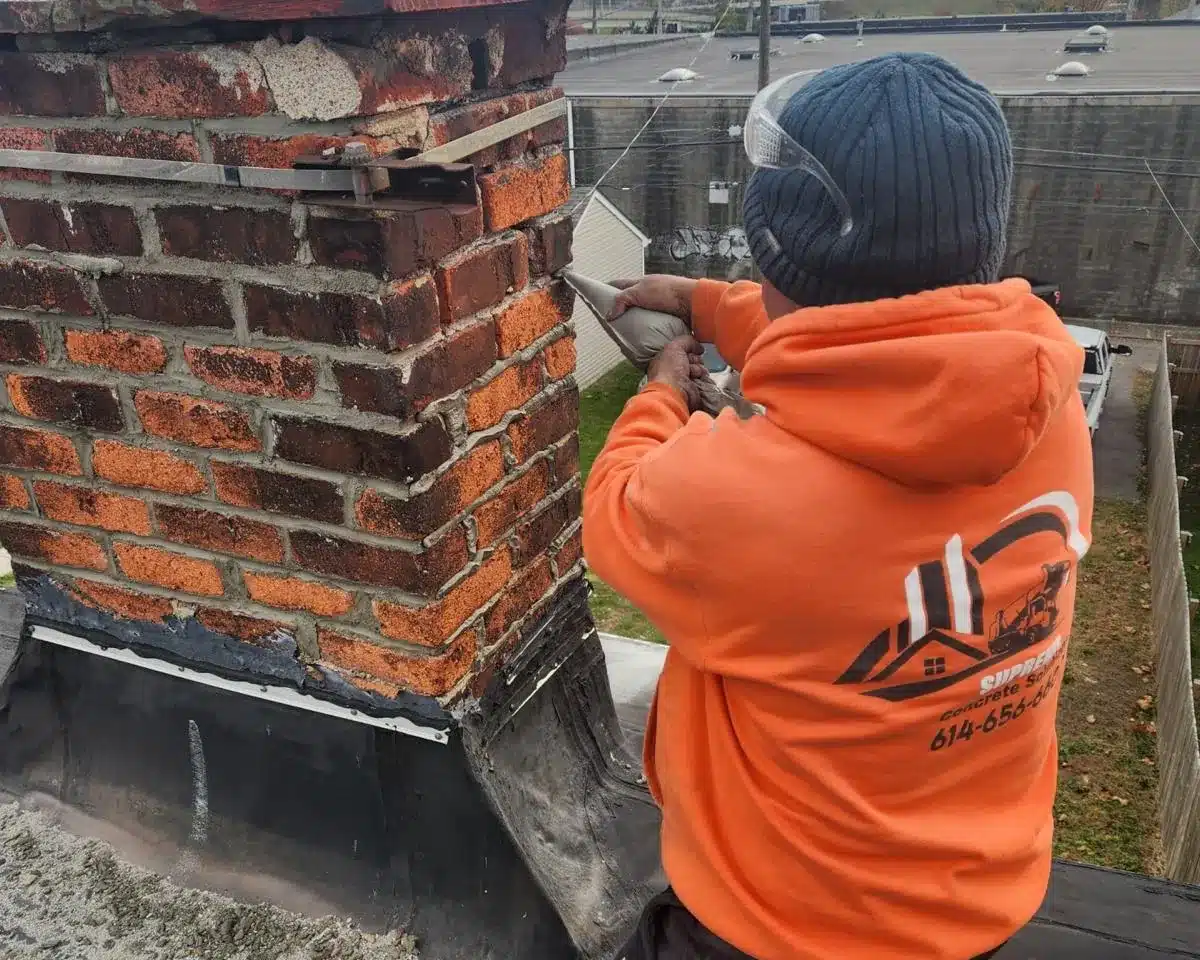
Chimney repairs start with the affected parts
A chimney has several components with different jobs. Naming the damaged part makes it easier to understand a repair proposal:
- The crown is the solid top surface around the flue openings, commonly made of concrete. It should shed water away from the masonry below.
- A rain cap sits over a flue opening to limit rain and debris entry while allowing exhaust to escape.
- Flashing connects the chimney and roof to manage water at that junction.
- Brickwork and mortar joints form the masonry structure. Cracked units, open joints, and movement need assessment.
A leak near the fireplace does not establish which component failed. Roof conditions, flashing, masonry, and the chimney top may all need consideration. Ask whether flashing or roofing work is included in the proposed repair and how any adjoining work will be coordinated.
Crown repair, brick replacement, and chimney repointing
Our chimney repair services cover crown repair or replacement, rebuilding damaged tops, replacing broken brick, and repairing missing or deteriorated mortar. We also offer concrete crack repair, sealing, and chimney waterproofing where appropriate to the condition.
Repointing removes unsound mortar from joints and replaces it with compatible material. Homeowners often call this chimney tuckpointing. The replacement should suit both the existing masonry and mortar; selecting the hardest mix is not the goal.
On older chimneys, strength, moisture movement, joint profile, and appearance all matter. A construction date or neighborhood does not identify the original mortar mix. The National Park Service guidance on repointing explains how unsuitable mortar can damage historic brick and stone.
Flaking brick faces, known as spalling, call for assessment of the affected units and the conditions contributing to deterioration. Fresh mortar does not restore a damaged brick face. White deposits may be efflorescence from water carrying salts through masonry, but staining alone does not establish structural failure or pinpoint a leak.
For related work elsewhere on the property, see our masonry repair and construction services.
Decide whether repair or rebuilding fits the chimney
Localized deterioration may allow selective repairs. More extensive damage can require rebuilding part of the chimney or replacing it. The decision depends on the remaining masonry, its support, the flue, and the cause of the damage.
Leaning, displaced masonry, or significant cracking requires evaluation of stability. Rebuilding only the section above the roof does not correct a failing support below. Structural assessment or engineering may be needed before a repair design can be finalized.
Compare proposals by what remains and what will be removed. Confirm the rebuild height, brick selection, crown and cap details, and any flue or liner work. If new brick will meet weathered masonry, discuss the expected appearance before ordering materials.
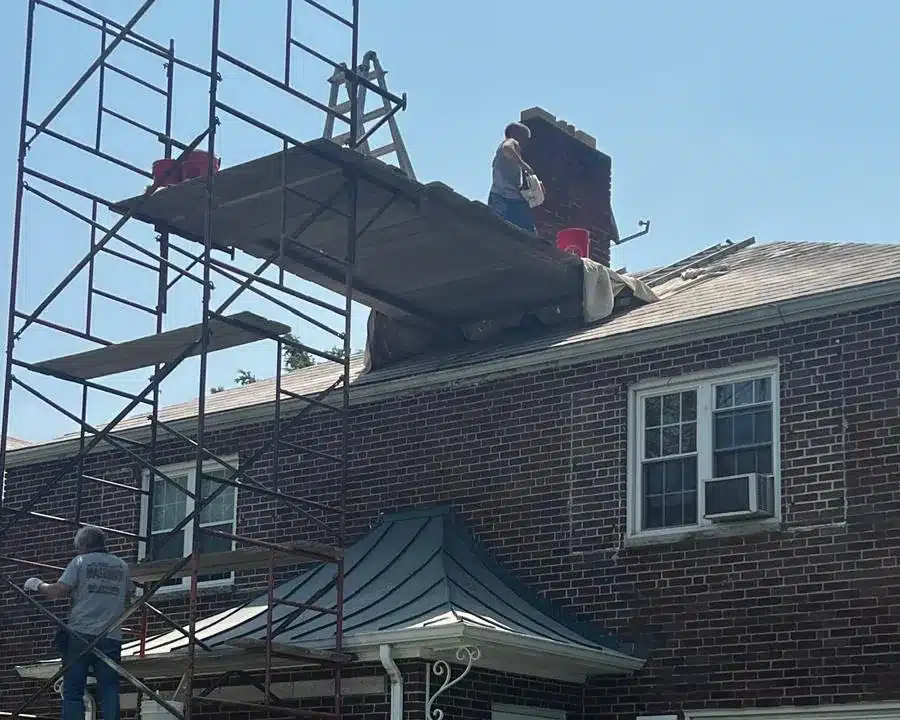
New chimney installation for homes and businesses
We build concrete, block, and masonry chimneys, including fireplace chimneys and commercial systems. New construction includes consideration of the chimney base and footings as well as the visible structure. Our foundation installation and repair services cover related foundation work.
The design must account for the fireplace or appliance being served. Fuel type, venting requirements, flue configuration, support, and the route through or beside the building affect the project. Appearance is one part of that planning. Share appliance information, drawings, and any planned equipment changes during the quote discussion.
Confirm the applicable permits, design requirements, and inspections before construction begins. A new appliance or a change in fuel can also change what the existing chimney system needs.
For commercial properties, describe the building's use, access restrictions, and any operating hours that affect construction. Our commercial work includes chimney repair, replacement, cap installation, liner work, and structural reinforcement. The scope must fit the particular system and its condition.
Include the flue and fireplace in the conversation
Exterior masonry repair and a chimney safety inspection answer different questions. Repairing a crown or replacing brick does not, by itself, confirm that the flue and connected fireplace or appliance are suitable for use.
Our residential chimney work also includes flue repairs and smoke chamber repairs. Describe any existing inspection findings when contacting us, including problems inside the chimney that may not be visible from the yard. Ask which evaluation and repairs are included and whether additional specialist inspection is needed.
The required inspection scope depends on the system and circumstances. Interior examination may be needed after an event that could have caused damage or when the appliance or fuel changes. Avoid treating a ground-level photograph as a complete condition assessment.
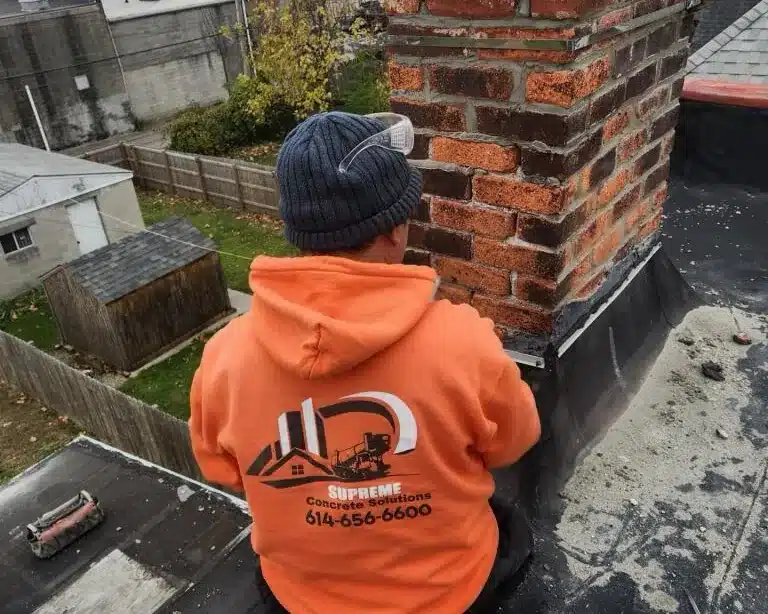
Plan access and understand the repair scope
Chimney height, roof slope, nearby structures, and access for scaffolding or equipment influence the work. Share ground-level photos and explain any restrictions around driveways, entrances, or neighboring property. Include details of previous repairs and when the current problem appeared.
Before scheduling, confirm the work areas, materials, debris removal, roof protection, and any restoration included. Discuss weather and curing requirements, and establish when the repaired system can return to use. You can browse our project gallery when considering materials and finished appearance.
Chimney repair questions
What affects the cost of chimney repair
The repair area, chimney height, roof access, damaged materials, and extent of rebuilding affect cost. Liner work, structural design, and access equipment can add to the scope. Photos help with the initial conversation, but concealed conditions may require further assessment.
Can waterproofing replace masonry repairs
A suitable water-repellent treatment may help reduce absorption, but it does not replace missing mortar, damaged brick, or failed flashing. Ask what is causing the moisture problem and which repairs are needed before a coating is considered.
How often should a chimney be inspected
The Chimney Safety Institute of America recommends annual inspection of chimneys, fireplaces, and vents, with cleaning and repairs as needed. Infrequent use does not remove the need to check for deterioration or obstructions.
Can I use the fireplace after a chimney fire
Do not use it until the chimney has been evaluated by a qualified chimney professional and any necessary work completed. Damage can be hidden inside the system. CSIA's guidance after a chimney fire explains why an exterior look is insufficient.
Request a chimney repair or installation quote
We serve Columbus, Dublin, Grove City, Pickerington, Reynoldsburg, Upper Arlington, Westerville, Whitehall, and Worthington. Send your address, project description, photos, and any inspection findings to start the discussion.
Call Supreme Concrete Solutions, request a free quote, or email info@supremeexterior.com.